
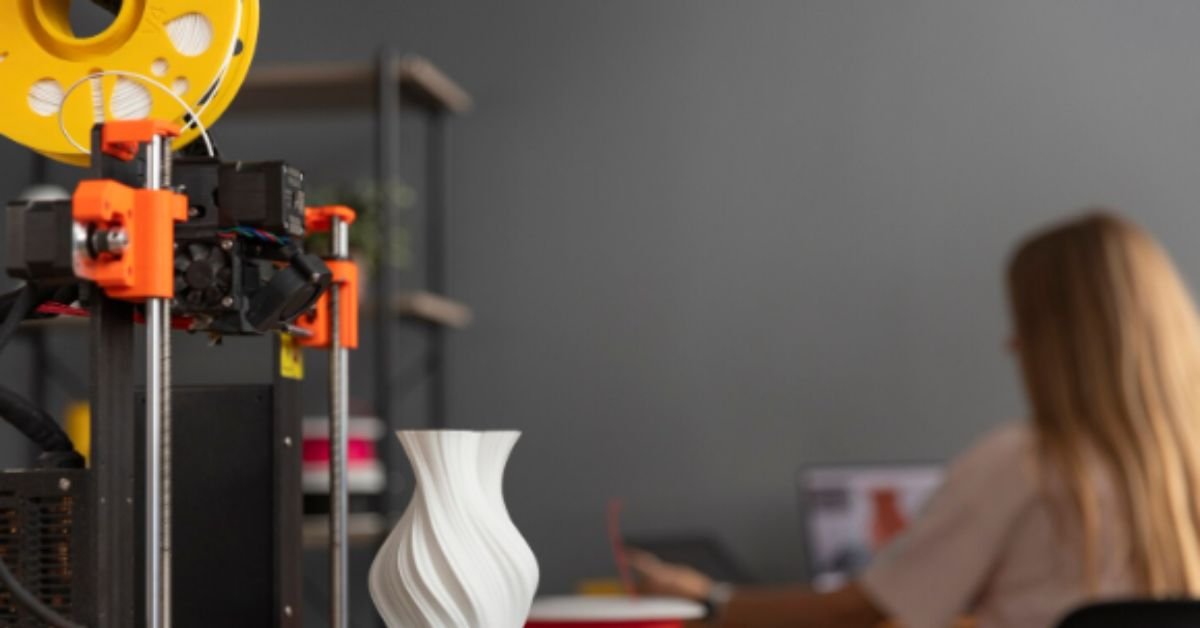
The world of manufacturing and design is standing on the cusp of a monumental shift, thanks to the continued innovation in 3D printing technology. 3D printing, or additive manufacturing, has long been touted as a game-changer, but as we advance further into the 21st century, it’s evident that this technology is not just a flash in the pan; it’s an industrial revolution in its own right. In this article, we explore how emerging trends and advancements in the 3d printing service sector are set to redefine the production landscape worldwide.
The Shift Towards Personalisation and Customisation
Traditional manufacturing methods are often constrained by the economies of scale, requiring substantial investment in moulds, tools, and setups that are cost-effective only when producing large quantities. In contrast, 3D printing excels in creating one-off items or small production runs at relatively lower costs. This flexibility enables manufacturers to offer a personalized experience to customers, who can have input in the design of their products, tailoring them to their specific needs and tastes.
Speeding Up the Prototyping Process
The rapid prototyping capabilities of 3D printing continue to be one of the most valued features of the service. By allowing designers and engineers to conceive, print, test, and refine products in a fraction of the time it takes with conventional methods, it dramatically shortens the development cycle. This acceleration not only hastens time-to-market but can also spur innovation due to the relatively low risk and cost of making changes early in the design process.
On-demand Manufacturing: A Sustainable Model
The on-demand nature of 3D printing highlights an approach that drastically cuts down on inventory and associated costs. Manufacturers no longer have to predict demand with the same level of accuracy previously required, allowing for more efficient supply chains. Furthermore, 3D printing is inherently less wasteful than subtractive manufacturing processes, as it only uses the material necessary to create the object. This reduction in waste represents a significant step towards a more sustainable manufacturing sector.
Complexity Comes at No Extra Cost
One of the unique advantages of 3D printing lies in its ability to create complex geometries that would be either impossible or prohibitively expensive to produce via traditional means. This characteristic opens the door for designs that can offer improved performance through intricate structures, such as internal lattices for strength without added weight.
The Integration of Diverse Materials
As 3D printing technology advances, so too does the range of materials that can be used. From plastics to metals and even biological materials, 3D printers are now capable of producing objects with varied properties, including flexibility, transparency, and electrical conductivity. Such diversity broadens the scope of possible applications, from consumer goods to biomedical implants.
Enhancing Supply Chain Resilience
The global events of recent years have shown the fragility of international supply chains. 3D printing offers a potential solution by decentralising production. Parts can be printed on an as-needed basis at or near their point of use, reducing reliance on long, vulnerable supply lines and thus improving overall supply chain agility.
Innovating Across Industries
The impact of 3D printing is widespread, reaching into industries such as healthcare, where it’s used for custom prosthetics and dental devices, through to aerospace, where it makes lighter and more complex components possible. Additionally, in the automotive industry, it’s being used for both prototyping and the production of end-use parts, streamlining the manufacturing process.
The Challenge of Intellectual Property
With the capacity to reproduce virtually any object with relative ease, 3D printing presents new challenges in intellectual property protection. The potential for product designs to be copied and distributed digitally necessitates a re-examination of existing IP frameworks to ensure creators’ rights are safeguarded in this new production landscape.
Upskilling the Workforce
The demand for a workforce proficient in 3D printing technology is growing, highlighting the need for educational and vocational programs to keep pace with the technological advancements. Upskilling existing workers and ensuring that the new generation is 3D literate is crucial in fully realising the potential of these services.
Overcoming Technical Limitations
While 3D printing is powerful, it’s not without its limitations. Issues such as print speed, the size of printable objects, and the strength of printed materials are areas where ongoing research and innovation are essential. Overcoming these challenges will open the doors to even wider adoption and application of 3D printing services.
Collaboration and Open Innovation
Open innovation – where businesses and research institutions share knowledge and resources – is particularly fruitful in the 3D printing sector. By collaborating on projects and research, stakeholders can drive the technology forward at a much faster pace than working in isolation.
The Future is Customisable
The future of production is leaning increasingly towards customer-centric, sustainable, and localised manufacturing methods, with 3D printing services at the forefront. This technology enables products to be created with a level of customisation and efficiency previously thought unattainable. As the demand for bespoke products continues to grow, so will the significance of 3D printing in meeting these needs.
Closing Thoughts
The path forward for 3D printing is one of continual growth and evolution. Businesses keen on staying ahead of the curve are increasingly looking towards the integration of 3d printing service providers into their production cycles. As development presses onward, we will likely see more industries and sectors integrate this technology, ensuring that the revolution has only just begun.
Adopting 3D Printing Services
Businesses considering integrating 3D printing into their operations should start by assessing their current manufacturing processes and identifying areas where 3D printing can add value. Whether it’s speeding up prototyping, reducing waste, or offering customised products, the benefits of adopting 3D printing are vast. What remains clear is that the trajectory of production is being irrevocably altered by this technology, shaping a future where innovation is not only welcomed but expected.