Did you know that only 13% of companies have fully mapped their supply chains, while over 70% have limited or no visibility beyond their Tier 2 networks? Despite its growing importance in today’s volatile business environment, supply chain mapping remains a challenge for most organizations.
More than half of all supply chain disruptions occur within a company’s lower-tier suppliers. This lack of visibility creates serious vulnerabilities. For example, in 2023, several multinational manufacturers faced production delays after sourcing components from suppliers later linked to restricted regions.
Historically, many organizations have prioritized cost and efficiency over transparency—often unintentionally creating blind spots within their operations.
The consequences of limited visibility can be far-reaching. You may not even know where your Tier 2 and 3 suppliers are located, making your business more reliant on overseas shipping than you realize. Without a comprehensive supply chain management approach that extends beyond direct partners, you remain exposed to hidden risks that can seriously impact your operations.
The Illusion of Visibility in Modern Supply Chains
Modern supply chains suffer from a troubling disconnect between perception and reality. Recent data shows that 85% of supply chain risks originate below the Tier 1 level—in areas most companies can’t see. This creates a dangerous “visibility cliff”, where insight drops sharply with each tier further from your business.
The numbers reveal a consistent pattern: while 60% of companies report strong visibility into their direct (Tier 1) suppliers, this falls to just 30% for Tier 2, and a mere 2% maintain meaningful insight into Tier 3 and beyond. Worryingly, this gap is growing. A McKinsey survey found that visibility into deeper tiers declined by seven percentage points year-over-year.
This isn’t just an operational issue—it extends to leadership. Only 30% of companies say their boards have a clear understanding of supply chain risks. As a result, many organizations remain unaware of critical vulnerabilities until a disruption hits.
The impact is significant: 51% of supply chain problems begin at Tier 2 or lower.
Without deeper visibility, supply chain mapping becomes an exercise in confirming what you already know—instead of uncovering hidden risks. And with 90% of companies lacking the digital talent needed to achieve transparency goals, the challenge is only growing.
Where Hidden Threats Actually Exist
Hidden threats primarily reside within your Tier 2 and Tier 3 suppliers—entities you don’t directly control but that remain deeply embedded in your supply network. Although they operate outside your immediate oversight, these suppliers can introduce significant risks across multiple dimensions.
The most dangerous blind spots often arise in subtier relationships, where over half of all supply chain disruptions originate.
- Quality control deteriorates as you move further upstream, where visibility and governance become increasingly difficult.
- Beyond quality, ethical compliance is harder to verify, potentially exposing your business to forced labor, human trafficking, or unsafe working conditions.
- Legal exposure is another major concern: you can be held liable for non-compliant contractors, regardless of their position in the supply chain.
- Cybersecurity is also a growing threat—vulnerabilities often stem from subtiers, where a single insecure third party can compromise even the strongest systems.
- Ownership structures add another layer of complexity, especially amid geopolitical tensions. Many companies were forced to trace ownership across their entire supply network during recent sanctions against Russia—often uncovering unexpected ties.
Unfortunately, the deeper the tier, the weaker the signal. Without real-time visibility into subtiers, proactive risk mitigation becomes nearly impossible. And a single upstream failure can cascade throughout your network, triggering widespread disruption.
Why Traditional Due Diligence Falls Short
Traditional due diligence methods fall short in several key areas when it comes to managing modern supply chain risks.
Today, many audits have become little more than checkbox exercises, often failing to detect, report, or correct environmental and labor issues. These point-in-time assessments offer only static snapshots—typically conducted once a year—leaving organizations exposed to rapidly evolving risks between review cycles.
Another major challenge is self-reported supplier data. Studies show that nearly 46% of self-reports are inaccurate, either due to poor recall or intentional misrepresentation. Some suppliers even train employees on what to say before audits, undermining the process entirely.
Questionnaires add to the burden. Many companies send generic, one-size-fits-all forms with hundreds of questions, regardless of supplier type. This leads to widespread audit fatigue among vendors, who must repeatedly answer the same questions for multiple clients.
In the end, traditional methods rarely lead to meaningful change. Even when violations are uncovered, follow-up tends to be minimal, resulting in superficial fixes rather than addressing the root causes. Ironically, the system works for corporations but fails workers and the planet, perpetuating risks instead of reducing them.
Without multi-tier supply chain mapping, these gaps leave your organization vulnerable to threats you can’t see—until it’s too late.
Tip: If you’re interested in how supplier mapping directly supports brand protection and reputation management, check out this article.
To better understand the limitations of traditional due diligence and the advantages of modern supply chain mapping, here’s a side-by-side comparison:
| Aspect | Traditional Due Diligence | Multi-Tier Supply Chain Mapping |
| Approach | Periodic, checkbox-style assessments | Continuous, data-driven, and dynamic mapping |
| Risk Detection | Limited to surface-level issues; often misses deeper or systemic problems | Identifies risks across all tiers, including Tier 2, 3 and beyond |
| Data Source | Relies heavily on self-reported supplier information | Combines verified data with external sources, real-time updates, and relationship mapping |
| Audit Frequency | Annual or infrequent | Ongoing visibility and monitoring |
| Scalability & Transparency | Difficult to scale and maintain visibility beyond Tier 1 | Designed for full network transparency across complex, global supply chains |
Conclusion
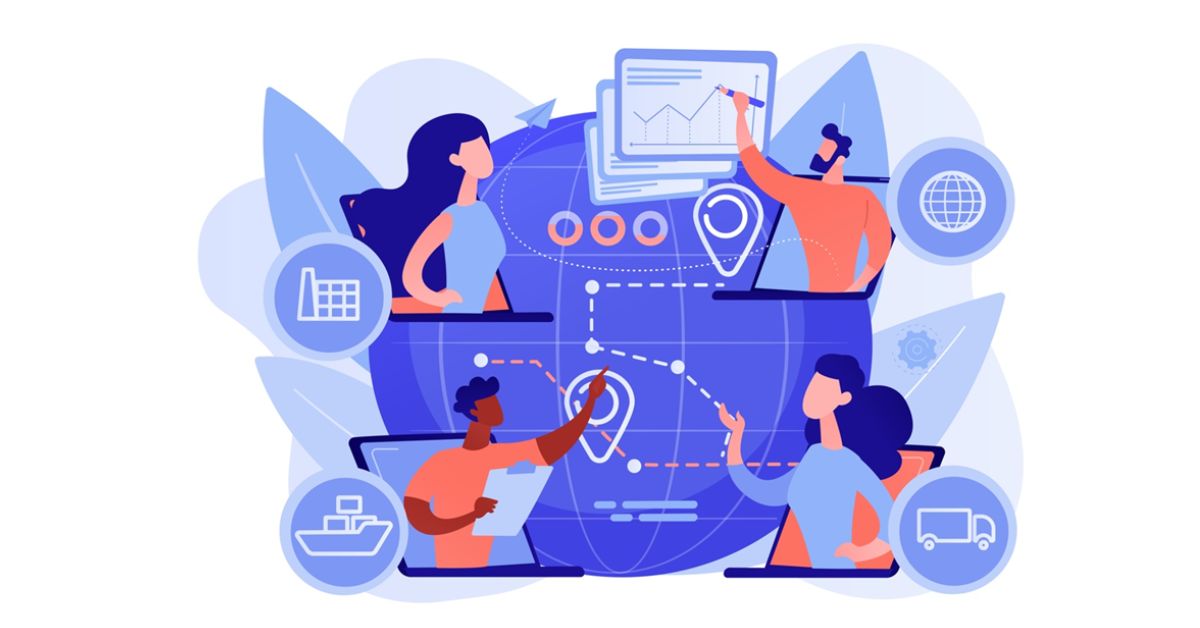
Mapping your supply chain beyond Tier 1 is essential for building real resilience—but it remains widely overlooked. While most companies have visibility into their direct suppliers, deeper tiers often remain hidden, leaving organizations exposed to quality issues, ethical breaches, legal risks, and cybersecurity threats. Traditional audits and self-reported data fail to capture the complexity and speed of global supply networks. To avoid disruption, reputational damage, or legal exposure, businesses must shift toward comprehensive visibility across all tiers—because a supply chain is only as strong as its weakest, often invisible, link.