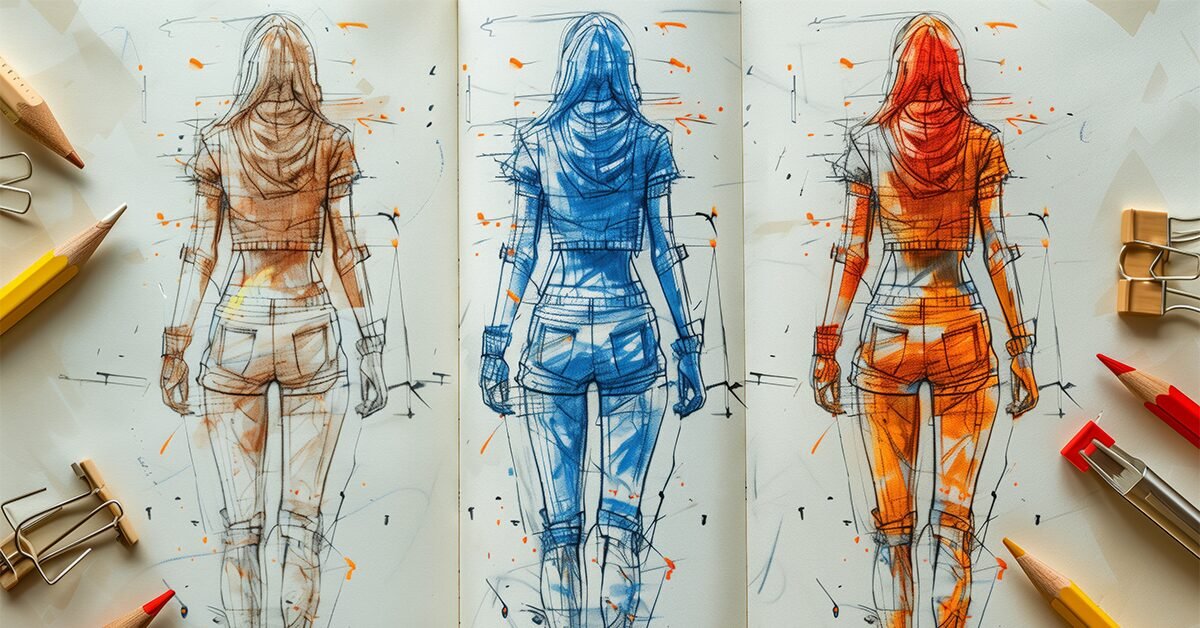
Drawing the human body is one of the most rewarding yet challenging skills an artist can develop. Whether you’re a beginner or an experienced sketch artist, mastering human anatomy allows you to breathe life into your characters, make your drawings more realistic, and express movement and emotion more effectively. But how do you perfect your human anatomy sketches without getting overwhelmed?
we’ll break down the essentials of drawing human anatomy, offer practical tips to improve your skills, and help you approach this complex subject with confidence. Let’s dive in!
TRENDING
Refreshing Your Screen: The Best Green iPhone Wallpaper Ideas
Why Focus On Human Anatomy?
Before picking up your pencil, it’s important to understand why human anatomy is so crucial for artists. Drawing the human form accurately enhances your ability to depict dynamic poses, realistic proportions, and believable characters. Even stylized or cartoon drawings benefit from a strong foundation in anatomy because it grounds your art in reality, making it relatable and natural.
When you understand the underlying structure of muscles, bones, and joints, you gain the freedom to manipulate the figure creatively without losing believability.
The Basics: Understanding Human Anatomy For Artists
Learn the Skeleton First
The skeleton is the framework of the body and determines the figure’s proportions and posture. Start by studying the major bones: skull, ribcage, spine, pelvis, arms, and legs. Get comfortable with their shapes and how they connect.
Why skeletons?
Because they give you a solid structure to build on, ensuring your proportions are correct before adding muscles and skin.
Study Muscle Groups
Muscles influence the surface shapes of the body and affect how skin stretches and compresses during movement. Focus on major muscle groups such as:
- Deltoids (shoulders)
- Pectorals (chest)
- Biceps and triceps (arms)
- Abdominals (stomach)
- Quadriceps and hamstrings (thighs)
- Calves (lower legs)
Understanding these will help you depict volume and tension in different poses.
Master Proportions and Measurements
Human proportions can be tricky. A common rule is that an average adult is about 7.5 to 8 heads tall. Knowing the relative lengths of limbs and torso ensures your figure doesn’t look distorted.
Remember, these proportions vary depending on age, gender, and body type, so practice drawing diverse figures.
Step-By-Step Guide To Perfecting Your Human Anatomy Sketch
Start with Simple Shapes
Begin by breaking down the human body into basic shapes: circles for joints, ovals for muscle masses, and lines for limbs and spine. This simplifies the complex structure and helps you position parts accurately.
Construct the Skeleton Framework
Sketch the skeleton lightly over your basic shapes. Focus on the head, ribcage, pelvis, and limb bones. This step ensures your figure will stand balanced and in proportion.
Add Muscle Mass
Use your knowledge of muscle groups to layer muscles over the skeleton. Remember muscles have volume, so avoid flat shapes. Pay attention to how muscles change shape when the body moves.
Refine the Outline
Smooth out your sketch by connecting the shapes and muscles into a coherent outline. Erase unnecessary construction lines but keep some for reference.
Shade and Add Details
To bring your sketch to life, add shading to indicate light and shadow. This step emphasizes the form, making the figure appear three-dimensional. Add skin details, wrinkles, and texture for realism.
Tips To Improve Your Anatomy Sketches Faster
Use Reference Images and Life Drawing
Nothing beats observing real human bodies. Use photo references or attend life drawing classes to practice from real models. This builds your visual library and sharpens your understanding of anatomy.
Practice Gesture Drawing
Gesture drawing captures the essence and movement of the figure in quick sketches. It’s great for loosening up and understanding flow and energy rather than getting stuck on details.
Break Down Complex Poses
If you’re facing a complicated pose, break it down into smaller parts. Focus on one limb or the torso at a time, then piece them together.
Keep a Sketchbook Dedicated to Anatomy
Regular practice is key. Use a dedicated sketchbook to experiment, make mistakes, and track your progress.
Study Anatomy Books and Tutorials
Books like Anatomy for Sculptors or Figure Drawing for All It’s Worth provide excellent explanations and visuals. Combine reading with practice for the best results.
Common Mistakes To Avoid
- Ignoring the skeleton: Skipping the underlying structure often results in unrealistic proportions.
- Drawing stiff figures: Focus on natural curves and relaxed poses to avoid stiffness.
- Over-detailing too soon: Build your sketch from broad shapes to details gradually.
- Forgetting variation: Not all bodies look the same — experiment with different ages, genders, and body types.
- Neglecting practice: Anatomy takes time and patience, so be consistent.
Conclusion
Perfecting your human anatomy sketch is a journey that requires dedication, observation, and practice. By breaking down the figure into its skeletal and muscular components, practicing with references, and focusing on gesture and proportions, you can develop sketches that feel alive and dynamic.
Remember, the goal isn’t to create photo-realistic drawings right away but to understand the form and movement beneath the skin. With time, your confidence and skill will grow, turning simple sketches into compelling works of art.
ALSO READ: Through Drawn Eyes: Capturing Emotion On Paper
FAQs
What is human anatomy in drawing?
Human anatomy in drawing refers to the study and depiction of the human body’s structure, including bones, muscles, and proportions. It helps artists create realistic and dynamic representations of people.
How can I improve my anatomy drawing skills quickly?
Practice regularly with reference images or live models, focus on learning the skeleton and muscle groups, and do gesture drawing to capture movement.
Do I need to memorize all muscles to draw human anatomy?
No, memorizing every muscle isn’t necessary. Focus on major muscle groups and how they affect the body’s surface. Observing and practicing is more effective.
What tools are best for anatomy sketching?
Pencils are great for sketching and shading. Many artists also use charcoal or digital tablets depending on their preference. The key is to choose tools that allow flexibility and layering.
Can anatomy skills help in drawing stylized or cartoon characters?
Absolutely! Understanding anatomy provides a foundation that improves proportions and movement, even in exaggerated or simplified styles.