

Introduction
Technological innovation is at the heart of modern heavy-duty trucking, shaping how fleets approach upgrades, repairs, and long-term planning. As new systems emerge, companies seek ways to integrate smarter, greener, and more reliable solutions into their trucks. Whether it’s predictive diagnostics, automation features, or sustainable fuel options, the transformation benefits operators, drivers, and the environment. Fleet owners looking to stay ahead of the curve increasingly turn to expert services such as TCS Upfitting, where technological advancements are seamlessly incorporated into heavy-duty truck upgrades to drive efficiency and performance.
The impact of these advancements resonates far beyond the truck itself; smarter upgrades can translate to less time off the road, lower operational costs, and a safer work environment for drivers. By embracing innovations like IoT-based fleet management and alternative fuel systems, trucking companies are positioning themselves for long-term success in a changing regulatory and business landscape. The trend toward adopting cutting-edge upgrades is accelerating, with industry leaders focusing on sustainable and data-driven approaches.
Predictive Maintenance Systems
Equipment downtime is a significant cost driver in the trucking industry, making predictive maintenance one of the most critical trends in heavy-duty truck upgrades. These systems rely on a network of onboard sensors monitoring vital mechanics, such as engine condition, transmission health, tire pressure, and brake performance. By processing real-time data, predictive analytics platforms can issue alerts before faults escalate into breakdowns. This proactive approach saves money by reducing emergency repairs, maximizes vehicle lifespan, and improves driver safety. Major fleet operators already see reduced maintenance costs and higher vehicle availability thanks to these systems. According to Forbes, data-driven predictive maintenance can lower maintenance expenses by as much as 30% for some fleets.
Autonomous Driving Technologies
Fully autonomous trucks are inching closer to becoming a reality, with industry frontrunners testing self-driving capabilities on highways worldwide. Technologies like lane-keeping assist, adaptive cruise control, and automated braking already contribute to safer roadways and less fatigued drivers. Companies like Plus and Waymo are developing Level 4 automation, where trucks can operate independently under specific conditions. These innovations promise to optimize fuel consumption, reduce accident rates, and help fleets navigate labor shortages. However, large-scale adoption faces challenges, including regulatory approval, liability frameworks, and public perception. As these hurdles are addressed, autonomous technology is expected to play a pivotal role in the next era of trucking, providing a foundation for continuous improvement and data-based operation strategies.
Advanced Materials and 3D Printing
The emergence of next-generation materials is helping redefine truck durability and efficiency. Truck manufacturers increasingly turn to ultra-strong yet lightweight alloys and composites for key components like frames and suspensions. These advanced materials are designed to minimize vehicle weight, improve fuel economy, and extend operational life—all without sacrificing strength. Meanwhile, 3D printing technology is revolutionizing the parts supply chain. Fleets can now quickly manufacture custom or replacement parts on demand, significantly reducing wait times and repair costs. This dramatically reduces vehicle downtime and helps fleets maintain superior uptime in the face of supply chain disruptions. As noted by Heavy Duty Trucking, 3D printing is becoming increasingly crucial for sourcing hard-to-find or out-of-production components.
Telematics and IoT Integration
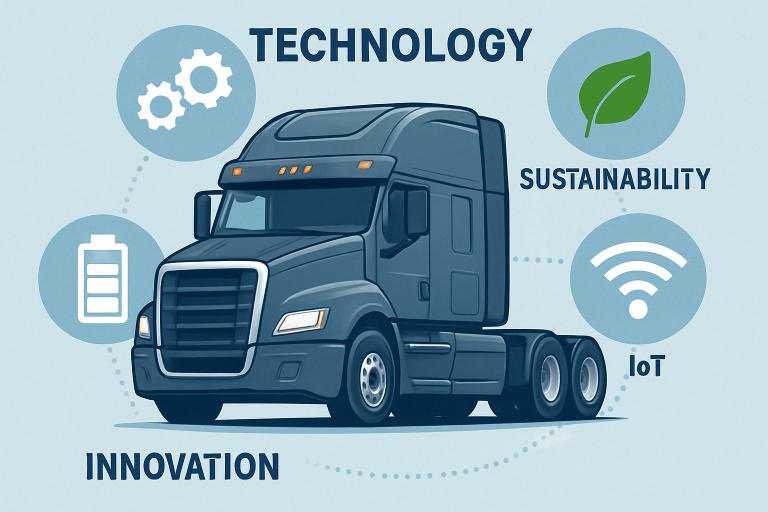
The digital transformation of fleet management is driven by integrating telematics and Internet of Things (IoT) devices in heavy-duty trucks. These technologies collect and transmit vast data, spanning engine diagnostics, location tracking, asset utilization, and driver habits. Fleet managers use this data to monitor vehicle conditions, optimize routes for fuel savings, and enforce driver compliance. Telematics platforms also facilitate electronic logging, making regulatory paperwork easier while ensuring ongoing compliance with safety rules. This connectivity leads to more brilliant, agile fleet strategies where real-time decisions drive down costs and boost overall efficiency. The Wall Street Journal reports that IoT-enabled telematics is rapidly becoming standard across commercial fleets.
Electric and Hydrogen Fuel Cell Technologies
Heavy-duty trucks have long relied on diesel, but electrification and hydrogen fuel cell solutions are emerging as credible alternatives for eco-conscious fleets. Manufacturers like Tesla, Volvo, and Nikola are racing to develop long-haul trucks powered by zero-emission technologies. Electric drivetrains deliver near-silent operation and low maintenance needs, and they have the potential to reduce the trucking industry’s carbon footprint significantly. Hydrogen fuel cells, for their part, offer fast refueling times and more extended range than purely electric options, making them suitable for regional and intercity routes. While the initial costs and infrastructure challenges are significant, ongoing investments in charging and refueling networks are boosting adoption. These developments align with growing regulatory and corporate sustainability mandates, positioning fleets for compliance and marketplace differentiation now and in the future.
From predictive maintenance and autonomous driving to material science breakthroughs and telematics, technology is reshaping the landscape of heavy-duty truck upgrades. Companies that adapt quickly and leverage resources will be best positioned to capitalize on new efficiencies, safety progress, and sustainable growth in future years.