In San Diego, laundry can pile up quickly between beach towels, workout clothes, school uniforms, workwear, and everyday household linens. The goal is not to rush through every load. It is to create a dependable routine that prevents small tasks from turning into an all-day weekend chore. For weeks when the schedule is especially crowded, a fluff and fold service San Diego CA, can also be a practical way to hand off part of the process.
Good laundry habits protect clothing while reducing rewashes, dryer time, and the clutter of clean clothes waiting in baskets. A few intentional choices, including sorting before wash day and using settings that fit the load, can make the routine easier to maintain in apartments, family homes, and shared living spaces across San Diego.
Why Laundry Feels Time-Consuming
Laundry is really a chain of jobs: collecting clothes, checking pockets, treating stains, sorting, washing, drying, folding, and putting everything away. Delays at any stage create a bottleneck. For example, leaving a finished load in the washer means the dryer sits empty, while leaving clean clothes in a basket often results in them wrinkling and needing attention later. A household that saves every load for Saturday may spend much of the day moving from one step to the next.
Build A Simple Laundry System
Make the system easy enough to use on a busy Tuesday, not just during a deep-cleaning weekend. Keep separate hampers or clearly marked sections for everyday clothes, towels, bedding, and delicate items. Store stain treatment near the hamper or washer, so it is available when a spill happens. Choose either set laundry days or short blocks throughout the week. Most importantly, move a completed load promptly and put it away before starting too many additional loads.
Sort With Purpose
Sorting does not require a separate tiny load for every color. Instead, separate clothes when their fabric weight, color, soil level, or care directions differ enough to affect the result. Towels can shed lint onto dark shirts, while lightweight tops may dry far sooner than jeans. Check pockets, close zippers, turn printed garments inside out, and use a mesh bag for machine-washable delicates when the garment label permits it.
Choose The Right Wash Settings
Match the cycle to the clothing rather than choosing the same button every time. Normal cycles suit many durable everyday items; permanent-press settings can help with wrinkle-prone synthetics; delicate cycles reduce agitation; and heavy-duty cycles are better reserved for sturdier, heavily soiled loads. The care-label guidance for everyday laundry is a useful reminder that water temperature, bleach use, and drying instructions should be followed for the garment whenever possible.
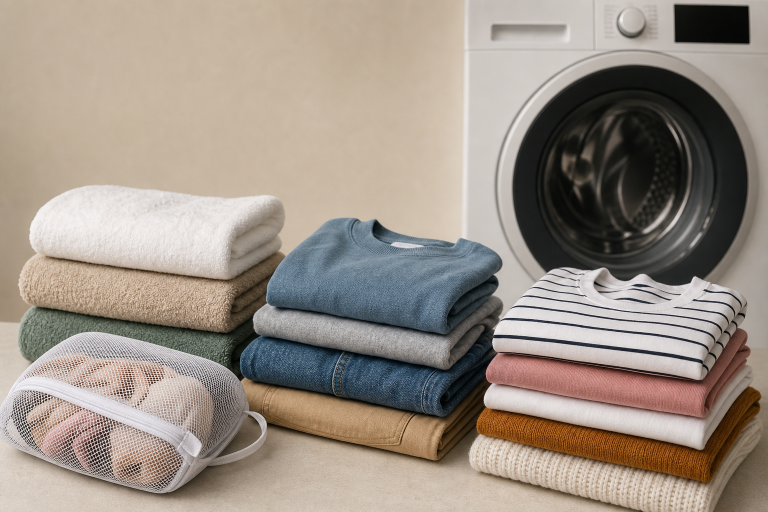
Quick cycles are generally best for lightly worn clothes that need a refresh, not for heavily soiled items. Avoid packing the washer too tightly, because crowded clothing cannot circulate as effectively. Measure detergent according to the product directions and load size. Extra detergent does not automatically mean cleaner laundry, and residue may require additional rinsing. Cold water is often appropriate for routine loads, but specialty fabrics, sanitation needs, and garment instructions may call for another setting.
Speed Up Drying Without Damaging Clothes
Separate heavy items from lighter ones before using the dryer. Towels and jeans usually need more drying time than T-shirts, athletic wear, and lightweight tops. Shake out garments before drying to reduce twists, clean the lint filter before each cycle, and select low or medium heat when the care label allows. Remove clothes promptly when the cycle ends, then hang shirts, dresses, and other wrinkle-prone pieces right away. Air-dry items that are likely to shrink, fade, stretch, or lose shape under high heat.
Handle Linens And Bulky Items
Comforters, blankets, mattress covers, and oversized towels need room to move for both washing and drying. Check the care label and your machine’s capacity before attempting to wash a large item at home. A comforter that remains damp in the center should not be folded or stored. Dry bulky pieces in stages if necessary, stopping to redistribute the filling and check for damp areas. For San Diego households returning from the beach or pool, washing sandy towels separately can also keep grit away from everyday clothing.
Make Folding Easier
Folding is faster when it happens soon after drying. Sort the load by person, room, or storage area first, then use hangers for garments that wrinkle easily. Simple folds work well for towels, pajamas, and workout clothing. Keep socks and other small items together in one container until the full load is ready to be put away. Practical ideas such as double hampers, mesh bags for small pieces, and separating heavy and light dryer loads can make the routine more orderly, as shown in laundry tips from household cleaning professionals.
Avoid Common Time Wasters
- Rewashing stains that could have been treated before the first cycle.
- Mixing towels with lightweight clothing can create uneven drying times.
- Using excess detergent and dealing with residue or extra rinsing.
- Leaving wet clothes in the washer for hours.
- Starting more loads than can be dried, folded, and stored that day.
- Ignoring care labels and damaging items with unsuitable heat or agitation.
When To Get Extra Help
Delegating laundry is not necessary for every household. Still, it can make sense during a move, an illness, a travel-heavy month, a new-baby period, or a demanding work season. Decide which items need personal handling, such as delicate garments or specialty fabrics, and which routine loads could be delegated. Before choosing a service, ask about turnaround time, detergent preferences, special instructions, stain handling, and policies for blankets or other bulky items.
Common Questions
How Often Should Clothing Be Washed?
Wash frequency depends on sweat, stains, fabric, and how the item was worn. Clothing that is visibly soiled or has an odor should be washed, while lightly worn outer layers may need airing out if their care instructions allow it.
Why Do Clothes Still Smell After Washing?
Common causes include an overloaded washer, too much detergent, a load left wet for too long, damp storage, or a washer that needs cleaning. Address the cause before rewashing.
How Can Laundry Take Less Time Each Week?
Sort early, treat stains quickly, choose sensible load sizes, move laundry as soon as cycles finish, and put clean items away before the pile grows. Consistency is usually more effective than trying to complete every laundry task in one long session.
Conclusion
Faster laundry does not have to mean careless laundry. A clear system, sensible sorting, suitable machine settings, and prompt folding can help San Diego households spend less time managing clothes while keeping fabrics in better condition. Start with one or two changes that fit your space and schedule, then build a routine that remains realistic week after week.
CLICK HERE FOR MORE BLOG POSTS