
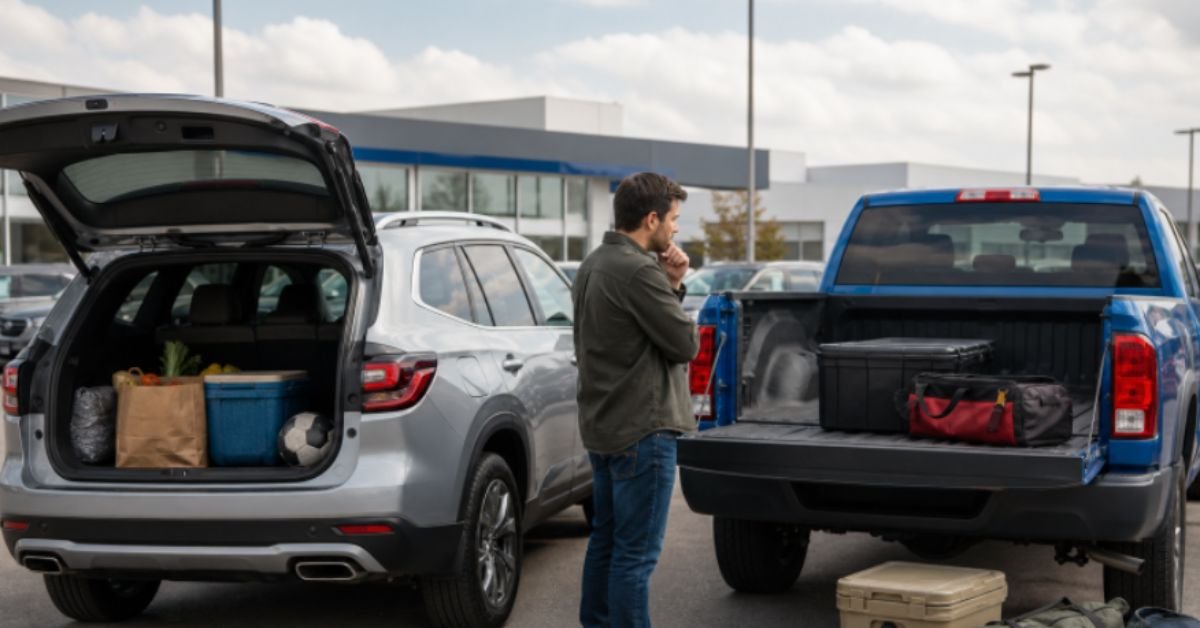
Choosing between an SUV and a pickup truck is easier when you focus on how the vehicle will serve your normal routine. Trends, big towing numbers, and rugged styling can be appealing, but your commute, passengers, parking situation, and weekend plans should guide the decision. If you are beginning to compare body styles and available features, learn more about the options that may suit your needs.
An SUV is often a natural match for drivers who want enclosed cargo space and family-friendly versatility. A pickup truck can be the stronger choice for frequent hauling, towing, outdoor work, or equipment transport. Neither is automatically better. The right vehicle is the one that handles the jobs you do most often without making everyday driving harder or more expensive than necessary.
Start With How You Drive
Before shopping, track how you use your current vehicle for two weeks. Note every school run, commute, grocery trip, project pickup, road trip, trailer tow, or drive on rough roads. This simple record helps separate regular needs from rare possibilities.
- How many people ride in the vehicle regularly?
- What items need to fit inside and stay protected?
- Will you tow a trailer, boat, camper, or equipment?
- Is most driving in town, on highways, or on unpaved roads?
- How much room is available in your garage, driveway, and parking areas?
Where SUVs Make Sense
SUVs work well for drivers who prioritize everyday comfort, flexible seating, and weather-protected cargo. The rear hatch makes it easy to load groceries, sports gear, strollers, luggage, or pets without exposing them to rain, snow, or road debris.
Many SUVs have folding rear seats that create a broad loading area, and three-row models can carry larger families when needed. Smaller crossovers are generally easier to park and maneuver than full-size pickups. Available all-wheel drive can also provide added confidence on wet, icy, or uneven roads. Still, compare like with like. A compact crossover offers a very different experience from a large three-row SUV.
Where Pickup Trucks Stand Out
Pickup trucks are designed around open-bed utility, substantial towing capability, and demanding work. A bed is especially useful for muddy tools, landscaping supplies, lumber, furniture, mulch, coolers, or other items that are awkward to place inside a cabin.
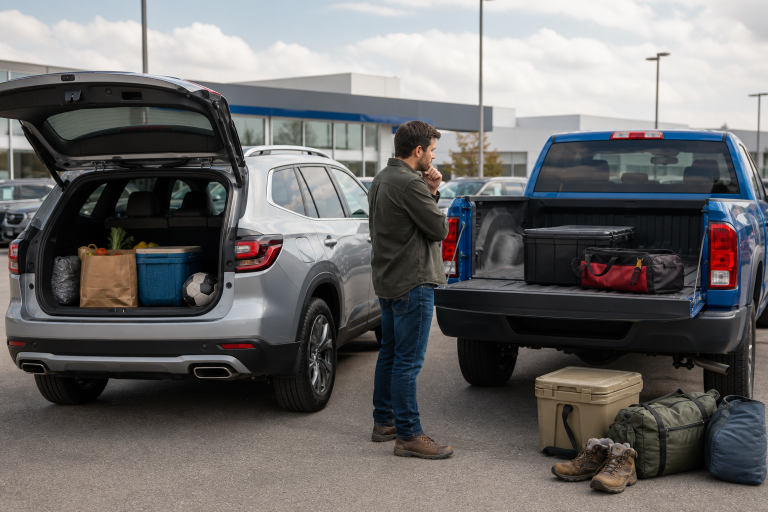
Many trucks offer towing packages, trailer brake controls, stronger cooling systems, and configurations built for equipment, campers, boats, or utility trailers. Crew-cab models can provide generous rear-seat space, while four-wheel drive may be valuable for job sites, farms, trails, and low-traction conditions. The tradeoff is that a longer wheelbase and larger footprint can make tight parking lots more challenging.
Compare Passenger And Cargo Space
Advertised cargo measurements are useful, but real-life testing matters more. Bring child seats if you use them, measure the largest item you carry regularly, and sit in the rear seats with the front seats adjusted for taller drivers. Check whether the cargo floor, tailgate, or bed rails are at a comfortable loading height.
SUV cargo space is enclosed and accessible from the cabin, which is helpful for valuables and temperature-sensitive items. Truck-bed space is better for tall, dirty, wet, or oversized loads. Look beyond the main storage area, too. Under-seat bins, center consoles, door pockets, and cargo organizers can make daily ownership easier.
Check Towing And Payload Needs
Maximum towing ratings are not a complete answer. Trailer weight, passengers, luggage, hitch equipment, and cargo all affect what a vehicle can safely handle. Understanding gross vehicle weight rating and combined weight limits can help you compare configurations more carefully.
- GVWR is the maximum weight of the vehicle, people, and cargo combined.
- GCWR is the maximum combined weight of the vehicle, trailer, and payload.
- Payload is the amount of weight the vehicle can carry.
- Tongue weight is the downward force a trailer places on the hitch.
Write down the loaded trailer weight, then add passengers, tools, accessories, and luggage. Review the door-jamb payload label on the exact vehicle, confirm that the hitch equipment matches the trailer, and leave a reasonable safety margin rather than shopping at the absolute limit.
Look Beyond The Sticker Price
Purchase price is only one part of ownership. Compare fuel or charging costs, insurance premiums, tire replacement prices, maintenance needs, registration fees, taxes, financing, and expected resale value. Larger wheels, aggressive off-road tires, heavy-duty suspension parts, and powerful engines can all increase long-term expenses.
A smaller SUV may be less costly for a commuter who rarely tows or hauls. A truck may deliver better value for someone who frequently uses its bed or towing equipment for work, recreation, or home projects. Price the trims you actually want, not just the lowest advertised starting price.
Review Safety And Visibility
Safety features can vary by trim, package, and model year, so confirm what comes on the exact vehicle. Review current vehicle safety ratings alongside available equipment such as automatic emergency braking, blind-spot monitoring, rear cross-traffic alert, adaptive cruise control, lane-keeping assistance, and surround-view cameras.
Also assess visibility from the driver’s seat. Tall hoods, wide roof pillars, large mirrors, and a high bed can create blind spots. A vehicle may feel comfortable on the highway but still be difficult to place in a crowded school pickup line or a narrow parking space.
Use A Smart Test-Drive Checklist
- Drive in stop-and-go traffic and on a highway entrance ramp.
- Park in a tight space and test the camera views.
- Spend at least 20 minutes in the driver’s seat.
- Open the rear doors, liftgate, tailgate, and storage areas.
- Pair your phone and test the infotainment controls.
- Listen for wind, tire, and suspension noise.
- Confirm the desired towing and safety equipment is included.
Common Questions From Buyers
Is An SUV Better For Family Driving?
An SUV can be an excellent family choice when covered cargo, easy rear-seat access, and flexible seating matter most. Choose the size based on the number of passengers, child-seat needs, and the amount of gear you carry.
Is A Pickup Truck Better For Road Trips?
A pickup can be comfortable for road trips, particularly with a roomy crew cab. However, luggage in the bed needs secure, weather-resistant storage or a properly fitted cover.
Which Costs Less To Own?
It depends on size, engine, mileage, insurance, tires, maintenance, and financing. For many commuters, a smaller SUV costs less. For frequent hauling or towing, a truck’s added capability may justify the expense.
Do SUVs Tow As Well As Pickup Trucks?
Some SUVs can tow substantial loads, but trucks usually offer more towing configurations, bed utility, and trailer equipment. Compare the ratings and equipment for the exact vehicle, not only the body style.
Should Buyers Choose Four-Wheel Drive Or All-Wheel Drive?
All-wheel drive is useful for changing road conditions, while four-wheel drive can be especially helpful in certain off-road and low-traction situations. Proper tires and careful driving remain essential with either system.
Make The Final Choice
Choose the vehicle that fits your regular needs, not the unlikely job it might handle once a year. An SUV may be ideal for enclosed storage, family comfort, and easy daily driving. A pickup truck may be the better fit for recurring towing, hauling, and job-site work. A written needs list, full cost comparison, and thorough test drive can make the right choice much clearer.