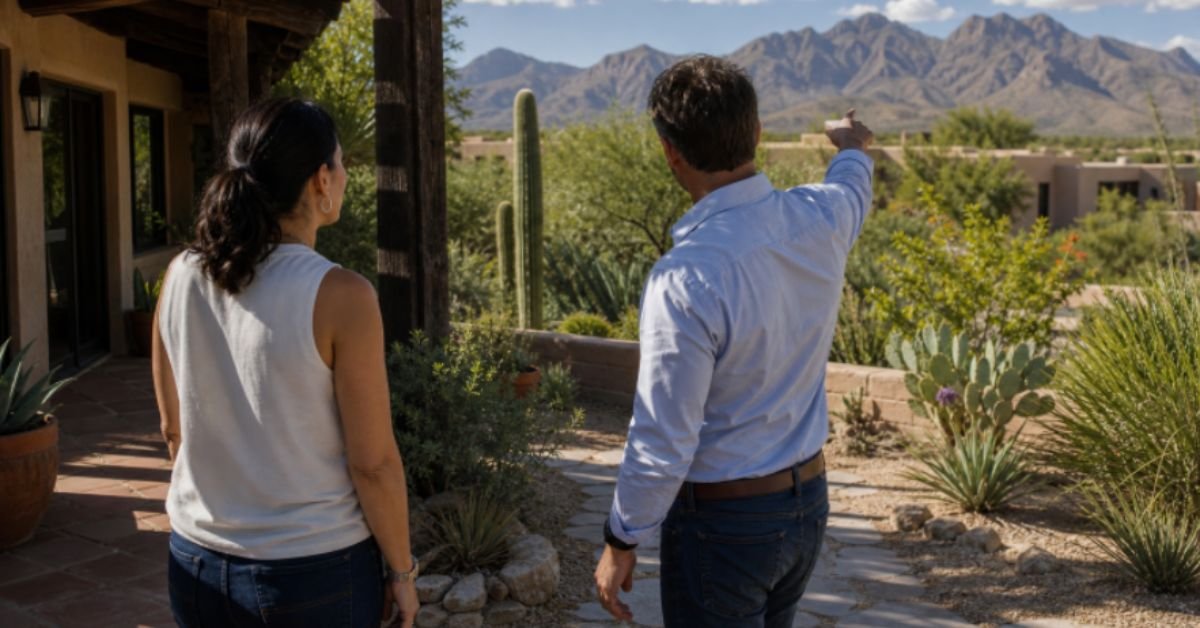
Choosing a Tucson neighborhood is about more than finding an attractive house or a dramatic mountain backdrop. In southern Arizona, a home’s setting can shape everyday driving, summer comfort, outdoor time, maintenance needs, and the way a property fits future plans.
For readers comparing areas and property types, Tucson homes for sale can be reviewed through Gray St. Onge’s Tucson real estate and home-search resource, which brings listings together with neighborhood, lifestyle, school, and market guidance. Gray St. Onge focuses on residential and luxury properties across Greater Tucson, including the Catalina Foothills, Ventana Canyon, Pima Canyon, Sabino Canyon, and Oro Valley, giving buyers useful local context when comparing distinct settings.
Start With the Daily Routine
Before narrowing the search, write down the five places you expect to visit most often. Include work, school or child care, grocery stores, medical providers, fitness facilities, family homes, and favorite recreation areas. Then use prospective neighborhoods as the starting point for those trips.
A foothill property with wide views may be an excellent fit for someone who values privacy and trail access. It may feel less convenient, however, if daily errands require repeated cross-town drives. In the same way, a central home may trade a larger lot or quieter street for shorter access to downtown, the University area, services, or established shopping corridors. The best choice is the one that works on an ordinary Tuesday, not only on a relaxed weekend.
Compare Tucson’s Setting Types
Tucson’s geography helps explain why neighborhoods can feel so different within one metro area. The city sits in a desert basin surrounded by mountain ranges, and changes in elevation, road patterns, vegetation, and nearby open land can affect a home search.
- Central neighborhoods may offer older housing, established streets, and closer access to urban destinations.
- Foothill areas can offer elevated lots, mountain or city-light views, winding roads, and homes designed to suit the terrain.
- Suburban communities may have newer construction, planned streets, neighborhood amenities, and easier access to everyday retail.
- Desert-edge properties can offer privacy and open views, while requiring buyers to pay closer attention to access, drainage, landscaping, and wildlife-aware living.
Look Closely at Heat, Shade, and Water
Summer conditions should be part of the search from the beginning. During a showing, notice which direction patios, pools, windows, garages, and main living spaces face. A shaded courtyard, mature trees, covered outdoor areas, and thoughtful window placement can change how usable a property feels during hotter months.
Ask for details on roof age, HVAC maintenance, insulation, solar equipment, irrigation, and water-use features. Desert landscaping can reduce turf-related upkeep and complement the Sonoran setting, but it still needs a plan for plant care, irrigation checks, and storm-season drainage. Buyers should also look for signs that water flows appropriately away from the house, especially around patios, washes, slopes, and retaining features.
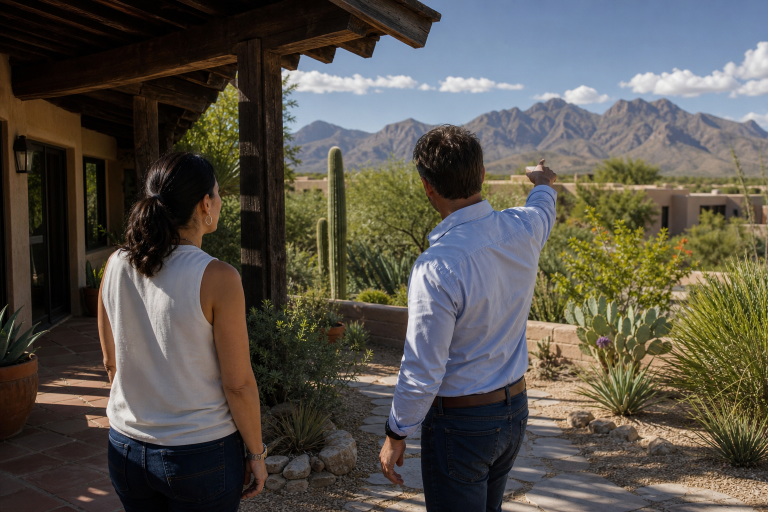
Review Roads and Travel Times at Different Hours
Map distance is only a starting point in a spread-out city. Drive the route to work, school, groceries, medical care, and Tucson International Airport during the times you would actually use it. Morning traffic, late-afternoon congestion, school pickup activity, and event traffic can create a different experience than a midday showing.
Visit at least once on a weekday, once in the evening, and once on a weekend. Listen for roadway noise, check lighting, observe neighborhood activity, and see whether the route feels comfortable after dark. In hillside or desert-edge locations, consider street width, turns, road surface, guest parking, and emergency access as well.
Confirm Schools and Public Services
School boundaries can change within a short distance, so buyers should verify the assigned school for the exact address directly with the applicable district. Neighborhood names, listing descriptions, and assumptions based on a nearby school are not a substitute for address-specific confirmation.
It is also wise to ask who handles trash collection, road maintenance, fire protection, utility service, and common-area upkeep. A community governed by an association may have separate rules, fees, architectural standards, or maintenance responsibilities. Review the relevant documents and official local information before closing so the property’s obligations are clear.
Match the Home Type to Your Plans
Single-family homes, townhomes, condos, custom properties, and older desert homes can each serve different priorities. A larger lot may offer privacy, room for a pool, gardening, or an accessory space, but it can also bring more landscaping, exterior maintenance, and irrigation responsibility. A smaller home or attached residence may simplify upkeep, although association rules may limit changes.
Think beyond the next year. Consider remote-work needs, pets, visiting family, accessibility, storage, hobbies, and whether the home can remain comfortable as life stages change. More square footage is not automatically better if it creates cooling, furnishing, or maintenance costs that do not match the household’s actual needs.
Use Neighborhood-Level Market Data
Citywide median prices can combine very different property types, conditions, and locations. Instead, compare recent nearby sales that resemble the home you are considering in size, age, lot characteristics, condition, and setting. Also, review active competition, price reductions, days on market, and sale-to-list price patterns for that specific area and price range.
Use a Simple Neighborhood Visit Checklist
- Visit during a normal weekday and again at a different time.
- Drive the routes you expect to use most often.
- Check traffic, noise, shade, drainage, and visible nearby construction.
- Test the mobile service and confirm available internet options.
- Ask about utilities, insurance considerations, maintenance, and association rules.
- Compare at least three recent nearby sales with the property under review.
- Return in another season when possible, particularly before committing to a view, yard, or outdoor-living priority.
Common Questions Tucson Buyers Ask
Which Tucson areas offer the best outdoor access?
The best fit depends on the activity. Some buyers prioritize nearby trails and desert scenery, while others want parks, golf, walkable destinations, or easier access to restaurants and services. Define the outdoor routine you expect to keep, then test the travel time from each neighborhood.
Is a mountain view worth paying more for?
A view can be meaningful, but buyers should evaluate the lot position, privacy, window orientation, future construction possibilities, maintenance demands, and whether the view is visible from the rooms they use most. A premium is easier to justify when the feature improves daily enjoyment and remains protected by the property’s setting.
Should buyers focus on Tucson or nearby communities?
Compare options based on daily travel, public services, housing style, lot preferences, schools, taxes, and community rules. The strongest choice may be inside Tucson or in a nearby community, depending on how the household expects to live.
Conclusion
The right Tucson neighborhood is the one that supports your budget, schedule, comfort, and long-term plans. By comparing roads, schools, climate-ready home features, services, local market activity, and outdoor access before making an offer, buyers can make a more confident decision in Tucson, Arizona.