Turning a long or slender workpiece on a CNC lathe can quickly become difficult when the part begins to flex under cutting pressure. Chatter affects more than appearance. It can interfere with size control, accelerate insert wear, create taper, and force a job to be reworked or scrapped.
Stable workholding is the starting point for preventing those problems. For shops evaluating a CNC lathe steady rest, Schmidt Tool & Manufacturing in Willis, Texas, offers manual and custom steady-rest solutions through its R.I.P. product line. The company has specialized in steady rests for more than four decades and serves machining operations worldwide, making its experience relevant when support requirements extend beyond a basic tailstock setup.
Why Long Workpieces Create Machining Problems
A long shaft may feel rigid when handled by hand, yet behave very differently once a cutting tool applies a continuous radial load. As the tool removes material, the workpiece can bend away from the cut, spring back, and begin vibrating. That movement changes the actual depth of cut, which can create a repeating cycle of increased and reduced cutting force.
The part is only one element in that system. Chuck grip, jaw contact, tailstock condition, support placement, toolholder stiffness, insert geometry, turret rigidity, and machine condition all influence stability. As the unsupported length grows relative to diameter, the workpiece generally becomes more prone to movement. Even a small amount of deflection can leave a poor finish or cause dimensions to change during a long pass.
How To Spot Chatter Before It Ruins a Part
Chatter often announces itself before it causes major damage. Operators should stop and investigate when they notice:
- A repeating squeal, pulsing sound, or harsh vibration during cutting.
- Regular waves, bands, or torn-looking marks on the turned diameter.
- Unexpectedly fast insert wear, chipped edges, or small cracks.
- Visible movement at the unsupported end of the workpiece.
- Changing measurements along a single turned section.
- Difficulty holding finish quality after the setup initially appeared stable.
These symptoms should not be treated as cosmetic concerns. Continued vibration can increase cutting forces, shorten tool life, and make the process less predictable.
Start With a More Rigid Setup
Before changing speeds and feeds, inspect the fundamentals. Clean the chuck jaws, workpiece, and locating surfaces. Remove chips, coolant residue, and burrs that could prevent full contact. Confirm that the jaws grip enough material for the operation without distorting thin sections or marking finished surfaces.
Then inspect the cutting assembly. Keep tool overhang as short as the clearance allows, verify that the insert is seated correctly, and set the cutting edge on center. Check for looseness at the toolholder, turret, tailstock, and support equipment. A small setup error can become a large vibration problem once the cut begins.
Choose Support That Matches the Part
Additional support should fit the part geometry and machining sequence rather than simply being added wherever space is available.
- Tailstock: Useful when the part can be supported from the end with a center and the cutting area remains accessible.
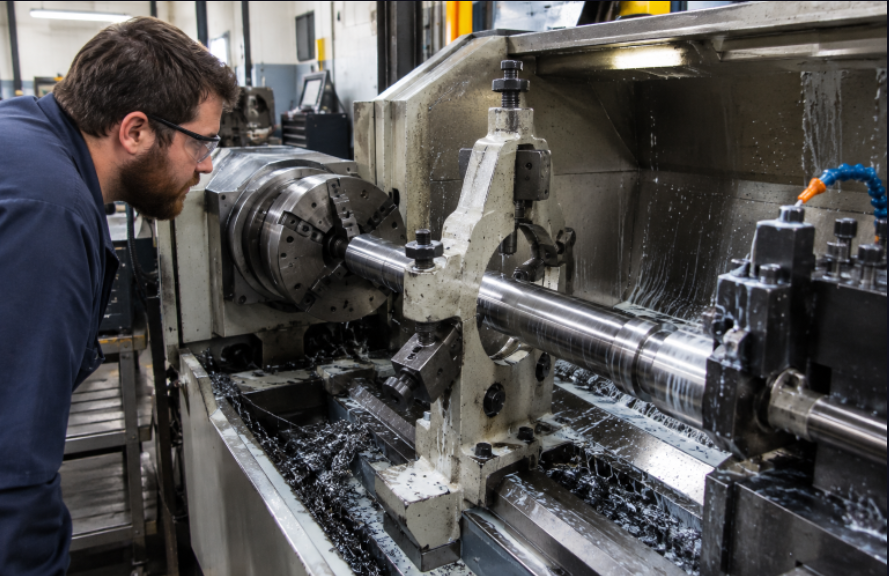
- Steady rest: Supports the workpiece at a selected location along its length, which is useful when the unsupported span needs control near the cutting zone.
- Follower rest: Moves with the carriage to support a slender section as the tool travels along the part.
- Custom fixtures: May be necessary for irregular profiles, thin walls, interrupted surfaces, or limited support locations.
Support position matters. A device placed too far from the section being cut may fail to control movement, causing chatter. Plan the sequence so the support can contact a suitable diameter and still leave the tool enough access to machine the required features.
What To Look For in a Steady Rest
When comparing steady rests, focus on application fit and the ability to make repeatable adjustments. Check that the mounting arrangement suits the lathe, that the diameter range covers the workpiece, and that the contact points can be set securely with minimal play. Rollers or pads should be selected based on the material, surface condition, coolant use, and expected cutting load.
Also consider practical production details, including chip protection, access for adjustment, replacement parts, maintenance needs, and technical support. A steady rest that is difficult to align or maintain can introduce variability rather than reduce it.
Adjust Tool Geometry and Overhang
The cutting tool can either calm the process or worsen vibration. Use the shortest practical holder and select an insert geometry, nose radius, rake, clearance, grade, and chipbreaker appropriate for the workpiece material and operation. An overly large nose radius can increase cutting pressure on a flexible part, while a worn insert can rub or cut inconsistently.
Internal turning deserves the same attention. Choose a boring bar with adequate diameter and the shortest workable reach. Longer tools are less stiff, and published reviews of chatter in machining tie vibration to limited dynamic stiffness in the tool holder and cutting tool. Replace worn or chipped inserts before testing multiple machine adjustments.
Tune Speed, Feed, and Depth of Cut Methodically
Change one variable at a time so the result is clear. Start with a sharp, correctly positioned tool. If cutting forces appear excessive, reduce depth of cut first. Next, test a different spindle speed, then make a measured feed adjustment. Use the tooling manufacturer’s recommended range as a starting point and record the settings that produce a stable result.
Simply slowing the spindle is not always the answer. Chatter occurs when the machine, tool, and workpiece interact under unstable vibration conditions. A different speed may move the operation away from that condition, while a lighter cut may reduce the force exciting it. Very light feeds can also encourage rubbing in some applications, so test rather than assume.
A Simple Shop-Floor Troubleshooting Sequence
- Stop a severe chatter condition safely.
- Inspect the part for poor seating, movement, damage, or an unsupported section.
- Check the insert, holder, and center height.
- Reduce unnecessary tool or boring-bar overhang.
- Add, reposition, or realign the tailstock, steady rest, or follower rest.
- Lower cutting load with a smaller depth of cut.
- Change one speed or feed setting and compare the result.
- Measure the part again before resuming production.
Common Questions About Supporting Long Parts
When should a long part use additional support?
Consider support when the part visibly flexes, develops chatter marks, struggles to hold size, or has a long unsupported extension. A tailstock, steady rest, or follower rest should be selected according to the part’s geometry, access requirements, material, and machining sequence.
Can a steady rest replace a tailstock?
Not always. A tailstock supports the end of the workpiece, while a steady rest supports a chosen point along its length. Some operations benefit from one method, while others need both at different stages.
Why does chatter occur only in one area?
That section may have a smaller diameter, less wall thickness, reduced support, or a local change in stiffness. Check the part and support location before making broad changes to the program.
Checklist for Repeat Jobs
- Verify that the part is clean, seated, and securely clamped.
- Keep tool overhang as short as practical.
- Install a sharp, correctly seated insert at center height.
- Align tailstock and steady-rest support carefully.
- Use firm support contact without excessive pressure.
- Record stable speed, feed, depth-of-cut, and first-piece measurements.
- Inspect the first pass for chatter marks before full production.
Final Takeaway
Chatter control begins with stability. Clean workholding, appropriate support, short tool overhang, suitable tool geometry, and disciplined cutting changes help protect long workpieces. The best turning setup is not the one with the most adjustments. It is the one that keeps the part, tool, and machine working together with controlled movement and repeatable results.