The advent of precision agriculture has been a game-changer in the way farming operations are conducted. By incorporating technology into various agricultural practices, farmers are now able to increase the efficiency and productivity of their farms. One of the key innovations that have emerged from this technological revolution is the spray drone, a cutting-edge tool that has begun to transform traditional methods of farm management and crop care.
The Emergence of Precision Agriculture
Precision agriculture combines various technological systems to optimise field-level management with regard to crop farming. Insatiable demands for food production due to a growing global population have led to this smart farming approach. Precision agriculture utilises data, GPS, and sensor technology to maximise both crop yield and profitability while minimising environmental impact.
Background: Spray Drones’ Role in Precision Agriculture
Within precision agriculture, a wide array of tools and technologies are employed to achieve finesse in farming practices. Among these, spray drones have risen as a particularly influential technology. Traditionally, crop spraying was performed using tractors or manual labour, which was not only time-consuming but also prone to inefficiencies and less precise chemical application. With the introduction of drones specifically designed for spraying, these challenges are systematically being overcome.
The Functional Mechanism of Spray Drones
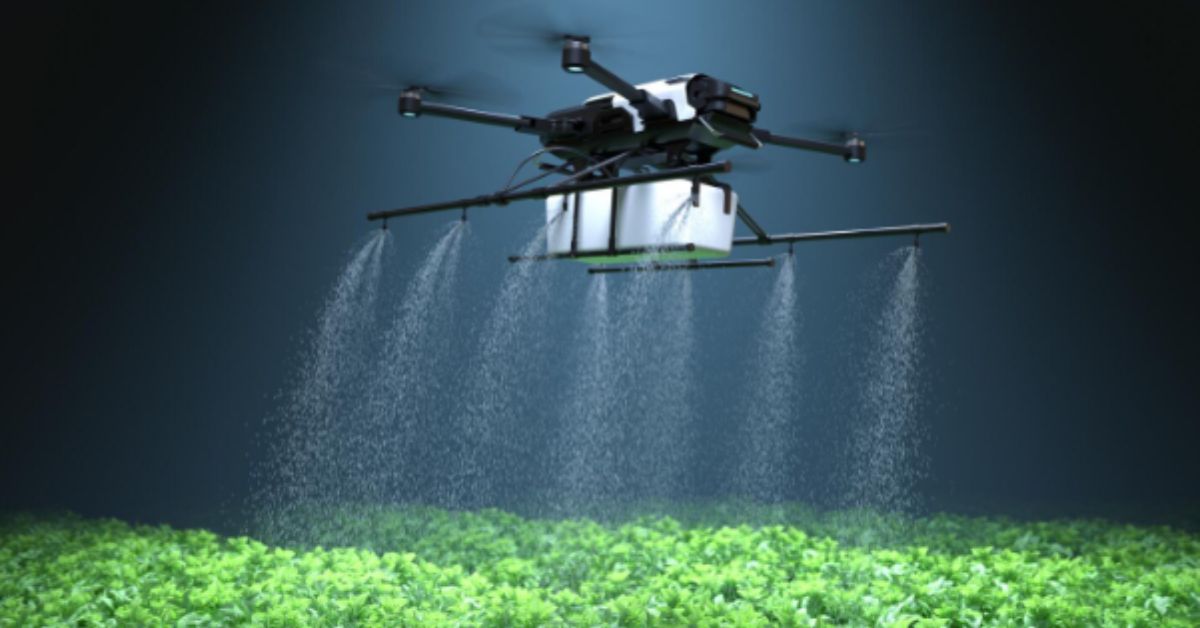
A spray drone typically operates by flying over crop fields and dispensing pesticides, herbicides, and fertilisers from an attached reservoir. These drones are equipped with advanced navigation systems, capable of meticulously plotting their course over the fields to ensure even and targeted application of the agrochemicals. Smart technology also allows them to adjust the spray volume according to the vegetative health, which is often monitored through infrared or multispectral cameras mounted on the drones themselves.
The precise application not only supports crop health but also contributes to resource conservation, as the spray drones apply exactly what is required, where it is needed, reducing run-off and waste. The enhanced accuracy leads to reduced chemical usage, which is both cost-effective and environmentally friendly. Moreover, by utilising drones, farmers can spray large fields in a fraction of the time it would take with ground-based methods.
The Strategic Advantages of Using Spray Drones
Beyond the immediate benefits of time and resource efficiency, spray drones offer strategic advantages. These include the capacity to operate in diverse weather conditions and terrains, reaching areas human labour or heavy machinery cannot. They also greatly reduce the exposure risk of workers to hazardous chemicals. Additionally, drone technology’s rapid advancement ensures ongoing improvements like longer battery life and higher payload capacities, which continuously augment the effectiveness of spray drones.
Implementation Challenges and Considerations
However, the widespread adoption of spray drones in agriculture faces several challenges. Aside from the initial investment costs, there are regulatory hurdles related to drone operations, particularly concerning airspace and pesticide application laws. Furthermore, the need for technical knowledge and familiarity with the operation of UAVs (Unmanned Aerial Vehicles) might require farmers to undergo training or hire specialised personnel.
Impact on Sustainability and Environmental Conservation
One pivotal aspect of using spray drones in agriculture is the impact it has on sustainability efforts. The more precise application of pesticides and fertilisers substantially reduces environmental contamination. Drones contribute to sustainable practices that protect surrounding ecosystems while maintaining agricultural productivity—aligning with a broader push towards eco-friendly farming.
The Future Trajectory of Spray Drones
The future of spray drones in agriculture looks promising. Technological enhancements, alongside better regulatory frameworks, are anticipated to diffuse the barriers to adoption. Additionally, as climate change prompts a re-evaluation of agricultural practices, the virtues of precision agriculture and the role of spray drones in achieving sustainable and resilient food systems become more pronounced.
The Economic and Social Impact
The introduction of spray drones can have significant economic and social implications. Economically, they can be seen as a long-term investment with potential returns through increased yields, reduced labour costs, and less expenditure on agrochemicals. Socially, these drones aid in the creation of tech-oriented jobs within agriculture, potentially attracting a younger workforce and forging a new direction for the sector.
Closing Thoughts
As the adoption of spray drones continues to increase, they undoubtedly stand at the forefront of a new era in agriculture. They epitomise innovation within precision agriculture, offering myriad benefits from increasing crop yields to supporting sustainable farming practices. It is clear that spray drones are not just a passing trend but a transformative force in modern agriculture.
In conclusion, the introduction of spray drones represents a significant leap forward in the field of precision agriculture. Their ability to provide precise, efficient, and environmentally friendly spraying solutions supports the transition to more sustainable farming methods and underscores the role of innovative technologies in revolutionizing agriculture. With ongoing advancements and increasing accessibility, spray drones are set to become an integral part of the farming landscape, ensuring food security and environmental conservation for generations to come.