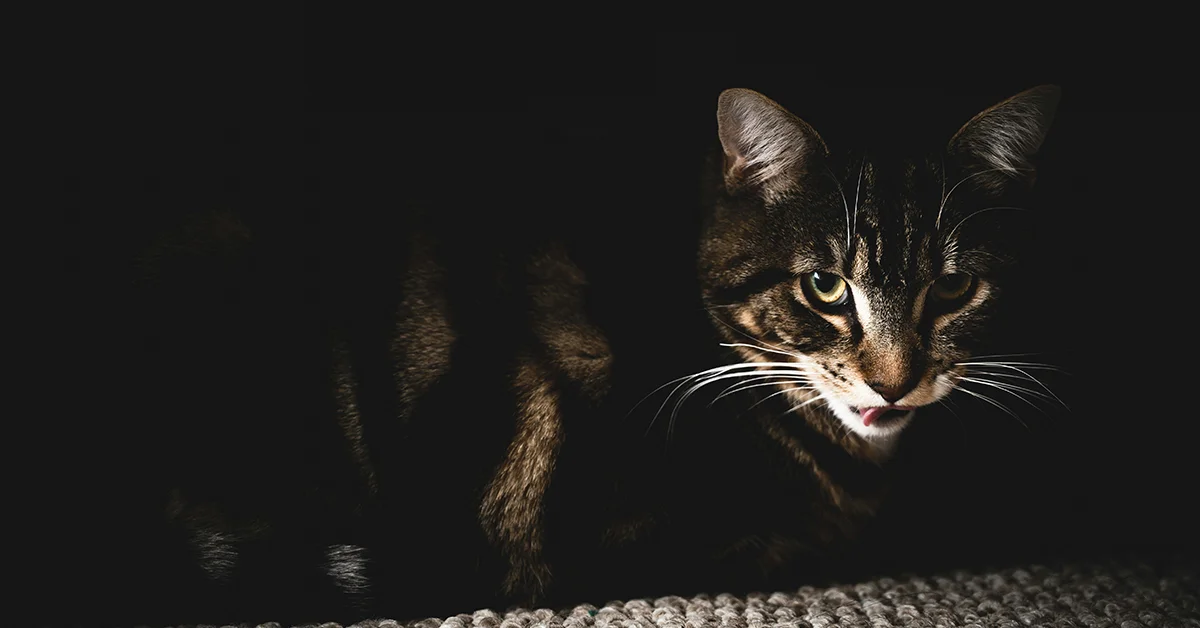
Cats have long been shrouded in mystery, with their nocturnal habits and ability to navigate in low-light conditions often making them seem like creatures of the night. But how much of this is myth, and how much is rooted in reality? The age-old question, can cats see in the dark?, has puzzled many cat owners and animal enthusiasts alike. In this blog post, we will dive deep into the fascinating world of a cat’s night vision, separating fact from fiction, and uncovering the truth behind their ability to see in dimly lit environments.
TRENDING
Meet The Baby Cockroach: Nature’s Little Survivors
The Cat’s Eye: A Window To Their Night Vision
Before we explore whether cats can truly see in the dark, it’s essential to understand the anatomy of a cat’s eye. A cat’s eyes are specially designed to thrive in low-light conditions, and these adaptations play a crucial role in their night vision.
The Tapetum Lucidum: The Night Vision Miracle
One of the most critical features that contribute to a cat’s ability to see in the dark is a special layer of cells in their eyes called the tapetum lucidum. This structure acts like a mirror that reflects light that passes through the retina back into the eye, giving the photoreceptor cells (rods and cones) another chance to absorb it. In other words, the tapetum lucidum enhances the available light, making it easier for cats to see in low-light conditions. This is the reason why cats’ eyes can sometimes appear to glow in the dark — it’s the tapetum lucidum reflecting light back into their pupils.
The Rods and Cones in a Cat’s Retina
The retina is where light is converted into neural signals that the brain interprets as images. Cats have a higher number of rods (the cells that detect light) compared to cones (the cells responsible for color vision). This means that cats are much better at seeing in low-light environments but may not have the same sharp color perception as humans do. While humans have three types of cones for color vision (red, green, and blue), cats only have two types, which means their color vision is limited. They see the world mostly in shades of blue and green, with reds and pinks appearing more grayish or dull to them.
Larger Pupils for More Light
Cats have relatively larger pupils compared to humans, which allows more light to enter the eye. This is particularly important during nighttime or in dim environments. A cat’s pupils can dilate to a much larger size than ours, increasing the amount of light they can absorb, even when it’s quite dim.
So Can Cats See In The Dark?
Now that we’ve covered the anatomical factors, it’s time to answer the burning question: can cats truly see in the dark? The short answer is no, cats cannot see in complete darkness. Just like humans, cats need some level of light to see. However, their eyes are far more adapted to low-light conditions, allowing them to see much better than humans can in the dark.
This enhanced night vision makes cats excellent hunters at dawn or dusk, which is why many of their predatory behaviors are most active during these times. Cats have evolved as crepuscular animals, meaning they are naturally most active during the twilight hours, when the light is low but not entirely absent. They can navigate and hunt efficiently even when the environment is dark to us.
How Much Better Can Cats See in Low Light?
To put it in perspective, cats can see in light levels as low as one-sixth of what humans need to see. So, while we struggle to make out shapes in dim light, cats can still navigate their environment fairly comfortably. The tapetum lucidum, which reflects light back into the eye, enhances their ability to see even the smallest amount of light, allowing them to catch their prey or avoid dangers during the nighttime.
Factors That Influence A Cat’s Night Vision
While cats are naturally adept at seeing in low light, there are several factors that can influence their night vision capabilities:
Age
Just like humans, as cats age, their eyesight can deteriorate. Older cats may have less efficient tapetum lucidum activity or experience other vision-related issues that can impair their ability to see in low light. This can make them less effective at navigating in dark environments, although they still retain superior vision compared to humans.
Health
The overall health of a cat plays a role in the condition of its eyes. Cats that suffer from certain conditions, such as cataracts or retinal diseases, may experience difficulties with their night vision. Regular vet check-ups are essential to ensuring a cat’s eyes remain healthy.
Breed
Some cat breeds are known for having superior night vision due to their genetics. For example, breeds like the Abyssinian, Bengal, and Savannah are often reported to have exceptional hunting abilities, and this can be attributed to their enhanced night vision. While all cats have similar anatomical features that aid in low-light vision, certain breeds have a slight edge.
Lighting Conditions
A cat’s ability to see in low light is heavily dependent on the amount of available light in the environment. If a room is completely dark, even a cat’s night vision won’t be able to work effectively. However, a small amount of light, such as from a nightlight or moonlight, is often enough for a cat to see clearly.
Cats And The Night: Myths vs. Facts
There are many myths and misconceptions surrounding cats and their night vision. Let’s debunk a few of the most common ones.
Cats Can See in Total Darkness
As mentioned earlier, cats cannot see in total darkness. Their ability to see in low light is enhanced, but they still need some ambient light to be able to navigate.
Cats Can See Everything at Night
While cats can see much better than humans in the dark, they do not have perfect vision. Their vision is optimized for detecting movement and shapes, but they do not have the same sharp detail that we have in daylight. So, while they may spot a mouse moving in the dark, they may not see it as clearly as we would see something in full daylight.
Cats Can See Color Like Humans
Cats’ color vision is not as rich or varied as ours. They see a world dominated by blues, greens, and grays, with red tones appearing much duller. This is because they only have two types of cones for color detection, compared to the three that humans have.
Cats Are Always Active at Night
While cats are indeed crepuscular, meaning they are more active during the dawn and dusk hours, not all cats are nocturnal. Some cats are perfectly content to sleep throughout the night, especially if they are well-fed and have access to entertainment during the day. However, if your cat is kept indoors and has a lot of energy to burn, it may choose to be more active during the night.
How To Help Your Cat See At Night
While cats are naturally gifted in low-light environments, there are a few things you can do to help your cat’s night vision abilities:
- Provide a Light Source: While cats don’t need much light, having a dim light, like a nightlight, in your home can make it easier for your cat to navigate around at night. This is especially helpful for older cats or cats with vision problems.
- Keep Your Home Cat-Friendly: Ensure that your home is free from obstacles and hazards that could cause your cat to injure itself in the dark. Create clear walking paths, especially in areas where your cat spends a lot of time.
- Monitor Your Cat’s Health: Regular vet visits are essential to keeping your cat’s eyes in top shape. If your cat is showing signs of vision problems, it’s important to consult a vet immediately.
Conclusion
In conclusion, cats are not creatures of the total dark, but they are far better equipped than humans to see in low-light conditions. Their specialized eyes, enhanced by features like the tapetum lucidum, large pupils, and a high number of light-detecting rods, give them an impressive advantage when it comes to seeing in the dark. While they may not be able to see in absolute darkness, they can see in conditions that would leave most humans stumbling. Whether it’s for hunting at twilight or simply navigating their home at night, a cat’s night vision is one of the many incredible adaptations that make them the exceptional creatures we know and love.
ALSO READ: Creative Ideas For Storing Bicycle Without Taking Up Space
FAQs
What is the reason behind a cat’s ability to see in the dark?
A cat’s ability to see in low light comes from the tapetum lucidum, a layer of cells in their eyes that reflects light back into the retina, enhancing their vision in dim environments.
Can cats see in complete darkness?
No, cats cannot see in total darkness. They need some level of light to navigate, but they are much better at seeing in low-light conditions than humans.
Do all cats have the same night vision capabilities?
Most cats have similar night vision, but some breeds, like the Bengal or Abyssinian, are known for their superior hunting and vision abilities, which are partly due to their enhanced night vision.
How do cats’ eyes differ from humans in terms of night vision?
Cats have more rods (light-detecting cells) in their retinas than cones (color-detecting cells), allowing them to see well in low light but limiting their ability to distinguish colors as humans do.
Can cats see color like humans?
No, cats’ color vision is limited. They see in shades of blue and green, and red tones appear dull or grayish to them.