

Key Takeaways
- Positive early experiences can help puppies become more comfortable with new people, places, sounds, and routines.
- Good socialization focuses on safe, controlled, pleasant exposure rather than crowded or forced interactions.
- Short sessions, treats, play, gentle handling, and rest are more effective than rushing a puppy through new situations.
- Learning should continue beyond the first few months as a puppy grows into adolescence and adulthood.
- Veterinary advice is important when balancing social development with vaccination and disease-prevention needs.
Bringing home a puppy is an exciting milestone, but the first few months can have a lasting influence on behavior, confidence, and overall well-being. In 2026, more owners recognize that positive early experiences, such as gentle socialization, consistent routines, and reward-based training, help puppies adapt to new environments and develop into well-adjusted adult dogs. Building trust during this stage can also strengthen the bond between pets and their families.
Whether you’re welcoming a mixed-breed puppy or exploring toy Schnauzers for sale, it’s helpful to understand how early experiences shape lifelong habits. Exposure to different people, sounds, and places, along with appropriate handling, can encourage resilience and reduce fear in unfamiliar situations. Starting with thoughtful care and positive interactions lays a strong foundation for a happy, confident companion.
Why Early Experiences Matter
Puppies learn from repeated contact with the world around them. When a new experience is introduced at a comfortable pace and paired with something enjoyable, such as a treat or a favorite toy, the puppy is more likely to view it as ordinary rather than threatening. Early learning can support better adjustment to household routines, visitors, grooming, travel, and training.
That said, early experiences do not guarantee a specific adult personality. Genetics, health, breed tendencies, environment, training, and individual temperament all matter. Socialization is best viewed as one important part of a thoughtful lifelong care plan.
Important Developmental Windows
Birth to Three Weeks
During the earliest period, puppies primarily need warmth, sleep, nursing, and calm care from their mother and breeder. Brief, respectful handling can help puppies become accustomed to human touch, but their needs are simple at this stage. Handling should always be age-appropriate and should never interfere with feeding, rest, or maternal care.
About Three to Fourteen Weeks
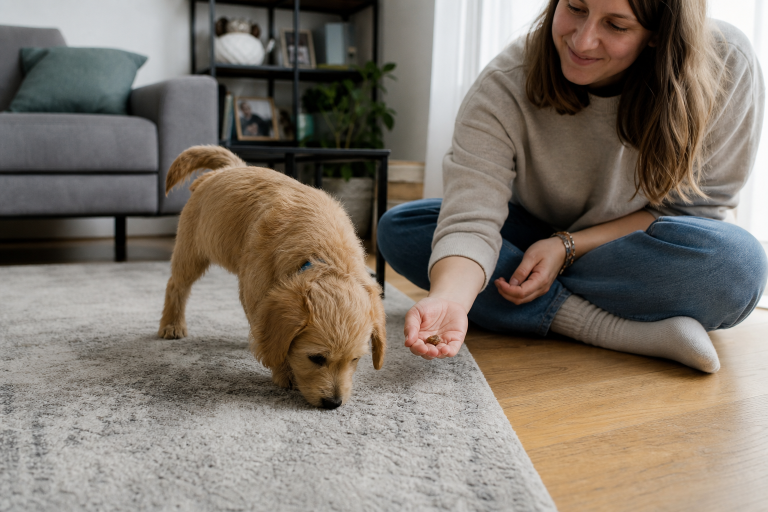
This period is often especially useful for gentle social learning. Puppies can gradually experience kind people, household noises, different surfaces, short car rides, crate time, brushing, and basic handling. The goal is not intensity. A puppy should have enough space and time to observe, investigate, and move away if needed.
After Fourteen Weeks
Learning does not end after the early socialization window. Older puppies can still build new skills and confidence through controlled outings, polite greetings, reward-based training, and small changes to routine. Progress may require more patience for a cautious puppy, but regular positive practice remains worthwhile.
Types of Positive Experiences
People and Gentle Handling
Introduce the puppy to calm adults and children who can follow clear instructions. A variety of appearances can be useful, including people wearing hats, glasses, coats, or uniforms. At home, practice briefly touching paws, ears, teeth, and fur while offering treats. This can make future grooming and veterinary care less stressful.
Household Sounds
Common noises can be introduced from a distance or at a lower volume. Examples include:
- Vacuum cleaners and blenders
- Doorbells and televisions
- Kitchen appliances
- Traffic, delivery trucks, and outdoor sounds
Pair sounds with food, play, or quiet praise. If the puppy freezes, hides, or refuses treats, increase the distance or stop the session and try again later at an easier level.
Surfaces, Places, and Other Animals
Safe introductions to grass, rugs, tile, wood floors, carriers, car interiors, ramps, and steps can help a puppy become more adaptable. Let the puppy investigate instead of pulling them toward the new surface. Meetings with other animals should be supervised and calm. A healthy, vaccinated, socially skilled adult dog may offer a better lesson than rough, chaotic play.
How Early Experiences Build Confidence
Confidence does not mean a puppy never startles. It means the puppy can notice something unfamiliar, remain reasonably calm, and recover. For example, a puppy may hear a delivery truck, look toward the sound, receive a treat, and return to play. Repeated successful moments teach the puppy that new sounds and sights are not automatically dangerous.
Recovery time matters. A puppy that repeatedly freezes, hides, trembles, pants heavily, or refuses food needs more distance, less noise, or a shorter session. Confidence grows from successful experiences, not forced exposure. The American Kennel Club’s puppy socialization guidance offers additional practical examples for introducing puppies to people, handling, places, and daily sounds.
A Simple Step-By-Step Plan
- Choose one new experience. Start with one person, sound, object, surface, or location.
- Make it easy. Reduce crowds, noise, and distractions.
- Let the puppy observe. Do not force touching, greeting, or movement.
- Add something enjoyable. Use a small treat, toy, or gentle praise.
- Keep it short. A few calm minutes may be enough.
- Watch body language. Loose muscles and normal eating suggest comfort, while escape attempts or a tucked tail suggest stress.
- End positively. Finish before the puppy becomes overtired or worried.
- Repeat before increasing difficulty. Familiar success creates a stronger foundation.
Common Mistakes to Avoid
- Doing too much too soon: Several major new experiences in one day can overwhelm a young puppy.
- Forcing interaction: Pulling a puppy toward strangers or dogs can increase fear.
- Ignoring warning signs: Stress signals should determine the pace of exposure.
- Confusing excitement with confidence: A frantic puppy may need quiet rest rather than more activity.
- Using punishment: Harsh corrections can make unfamiliar people, places, or sounds feel more threatening.
- Skipping sleep: Rest is essential for emotional recovery and healthy development.
Health and Safety Considerations
Socialization and disease prevention should work together. Ask a veterinarian which public spaces, puppy classes, outdoor areas, and dog interactions are appropriate based on the puppy’s age, vaccination status, and local disease risks. Safer options may include watching the world from a clean carrier, meeting trusted visitors at home, practicing handling indoors, or visiting a clean private yard when advised by a veterinarian.
Why Learning Should Continue
Early practice can make everyday tasks easier later. Puppies that learn to enjoy brushing may tolerate grooming better. Puppies that take brief, pleasant car rides may handle travel more comfortably. Puppies that practice calm greetings can be easier to manage around visitors. Continue learning with leash walks, food puzzles, quiet alone time, training games, and controlled visits to new places.
Conclusion
Positive early experiences give puppies useful lessons about the world. The best approach is steady rather than rushed: introduce one new thing at a time, keep the setting safe, reward calm choices, and provide plenty of sleep. With consistent support from the home and veterinary team, early learning can become a strong foundation for a confident adult companion.