
The way consumers shop online has changed dramatically in recent years. With advancements in augmented reality (AR), artificial intelligence (AI), and 3D visualization technologies, brands are now offering tools that allow customers to preview products in real time before purchasing. This transformation has given rise to virtual try-on accessories, which are quickly becoming the gold standard for the future of online retail. Whether it’s trying on eyewear, jewelry, or watches, shoppers no longer need to rely solely on static product photos—they can experience lifelike previews directly on their devices.
For example, shoppers can now explore Virtual try on accessories platforms that bring realism and confidence to every purchase.
Consumers crave convenience, personalization, and confidence in their buying decisions. With e-commerce competition increasing daily, retailers who fail to adapt risk falling behind. That’s why adopting virtual try-on technology is no longer optional; it’s essential.
How SellerPic’s Virtual Try-On Works for Accessories
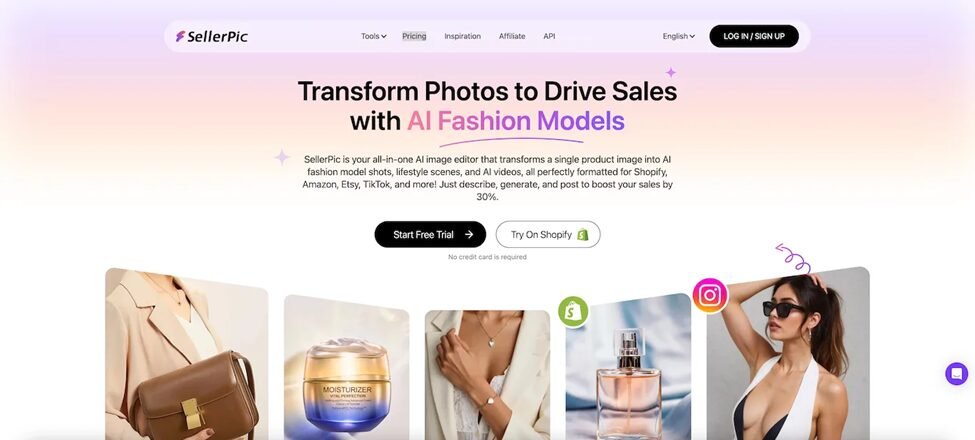
SellerPic’s AI-powered virtual try-on platform revolutionizes how accessories are showcased online. Here’s how it works:
Step-by-Step User Experience:
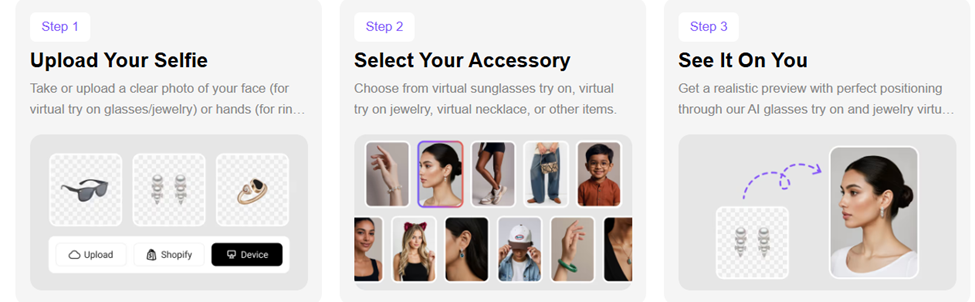
- Upload Your Selfie: Take or upload a clear photo of your face (for virtual glasses/jewelry try-on) or hands (for ring try-on).
- Select Your Accessory: Choose from virtual sunglasses try-on, jewelry try-on, or other items.
- See It On You: Get a realistic preview with perfect positioning through AI technology.
Key Features:
- Cost Savings: Eliminate expensive photoshoots by creating professional visuals in minutes.
- Unlimited Style Possibilities: Customers can try on eyeglasses, rings, jewelry, and more with diverse model representations.
- Effortless Integration: Seamlessly integrate virtual try-on into e-commerce platforms without technical complexity.
Category-Specific Virtual Try-On Features of Sellerpic
| Accessory Category | Description & Features |
| Jewelry | Includes rings, bracelets, necklaces, and earrings. SellerPic’s AI positions jewelry with precise hand and wrist tracking or facial mapping for earrings and necklaces. It renders metals and stones with material-aware lighting to simulate realistic reflections and shadows, enhancing the product’s appeal. Diverse model options help showcase jewelry on various skin tones and hand shapes, increasing inclusivity and customer confidence. |
| Glasses | Virtual try-on for sunglasses and optical frames uses facial recognition and mapping to fit frames perfectly to the user’s face shape and size. The platform supports multiple styles and colors, allowing customers to see how different frames complement their features. The realistic rendering includes reflections and shadows for a lifelike appearance. |
| Ring | Ring try-on focuses on hand and finger tracking to position rings naturally. SellerPic’s AI adapts to different finger sizes and skin tones, showing various ring styles engagement, wedding, fashion rings—with accurate scale and lighting. This reduces sizing uncertainty and helps customers visualize rings in different contexts. |
| Shoes | Shoe try-on simulates footwear on models’ feet, allowing customers to see style, color, and fit from multiple angles. The AI adjusts for shoe shape and foot positioning, providing a dynamic preview that helps shoppers imagine the shoes in real life. This feature supports different shoe types, from casual to formal. |
| Hat | Hat try-on uses head tracking and model overlays to place hats, caps, and headwear realistically on the user’s head or models. The AI accounts for head shape and size, ensuring proper fit and style visualization. This helps customers assess how different hats suit their face and outfit. |
| Earrings | Earrings try-on leverages facial mapping to position studs, hoops, and dangling earrings with precision. The platform can distinguish between ear studs and longer earrings, choosing the right model preset for optimal display. Realistic shadows and reflections enhance the lifelike effect. |
| Necklace | Necklace try-on uses neck and shoulder mapping on models or user photos to display necklaces in correct scale and drape. Material-aware rendering highlights metals and gems, showing how necklaces fall naturally with different necklines and skin tones. |
| Headband | Headband and wig try-on features place hair accessories with accurate positioning and realistic textures. The AI adapts to head shape and hair volume, allowing customers to preview styles and colors seamlessly integrated with their own image or model avatars. |
Key Advantages Across All Categories
- Realistic Visuals: SellerPic transforms static product photos into lifelike visuals that highlight the accessory’s unique features, including material texture, color, and fit.
- Diverse Model Library: Showcases products on models with varied skin tones, face shapes, and body types to appeal to a broad audience.
- No Photoshoot Needed: Eliminates the need for costly and time-consuming photoshoots by generating professional-quality visuals instantly.
- Bulk Processing: Upload multiple product images at once and generate try-on visuals quickly for large collections.
- Seamless Integration: Easily integrates into popular e-commerce platforms like Shopify and WooCommerce, with no technical complexity.
- Customizable Sizing: Users can adjust the product size on models or their own photos to ensure accurate representation.
- Material-Aware Rendering: Realistic depiction of metals, crystals, fabrics, and other materials enhances customer trust and purchase confidence
How Virtual Try-On Accessories Enhance Online Shopping
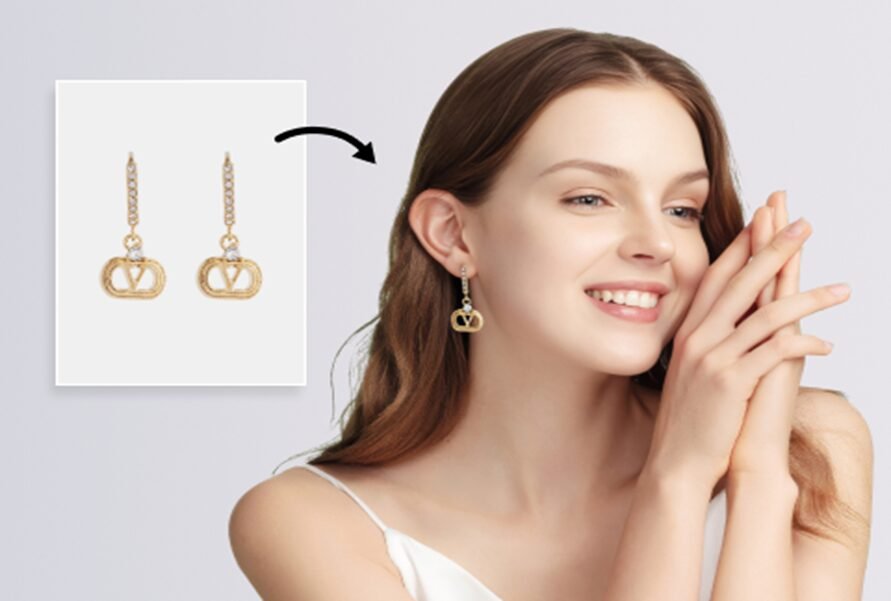
One of the biggest pain points of online shopping is the inability to physically test or examine a product before purchase. Virtual try-on accessories solve this issue by using AR face-mapping, hand tracking, and 3D rendering technologies to create highly realistic previews.
For example:
- Eyewear Try-On: Customers can see how frames fit their face shape and match their style.
- Jewelry Try-On: Shoppers can preview how rings, bracelets, and necklaces look on their skin tone.
- Watch Try-On: Consumers can test different strap styles, face designs, and case sizes directly on their wrist.
This real-time product visualization helps reduce uncertainty and improves customer confidence, leading to higher conversion rates. Studies show that AR-driven shopping experiences lead to longer site engagement and more satisfied buyers.
Why Virtual Try-On Accessories Are the Future of E-Commerce
The phrase “try before you buy” has always been important in retail. Virtual try-on technology brings this concept into the digital age. Why Virtual Try-On Accessories Are the Future of E-Commerce lies in their ability to merge customer experience with cutting-edge technology.
Here’s why they are the future:
- Reduced Returns: Shoppers make better-informed decisions, decreasing size and style-related returns.
- Improved Conversions: Studies reveal that 3D/AR shopping increases add-to-cart rates by up to 90%.
- Personalization: Virtual try-on tools allow customers to choose variations like color, size, and style in real time.
- Omnichannel Integration: Retailers can integrate AR try-on technology across websites, apps, and even social media.
By incorporating AR tools, businesses not only improve customer satisfaction but also cut down on operational costs related to returns and exchanges.
The Role of AI and 3D Visualization in Virtual Try-On
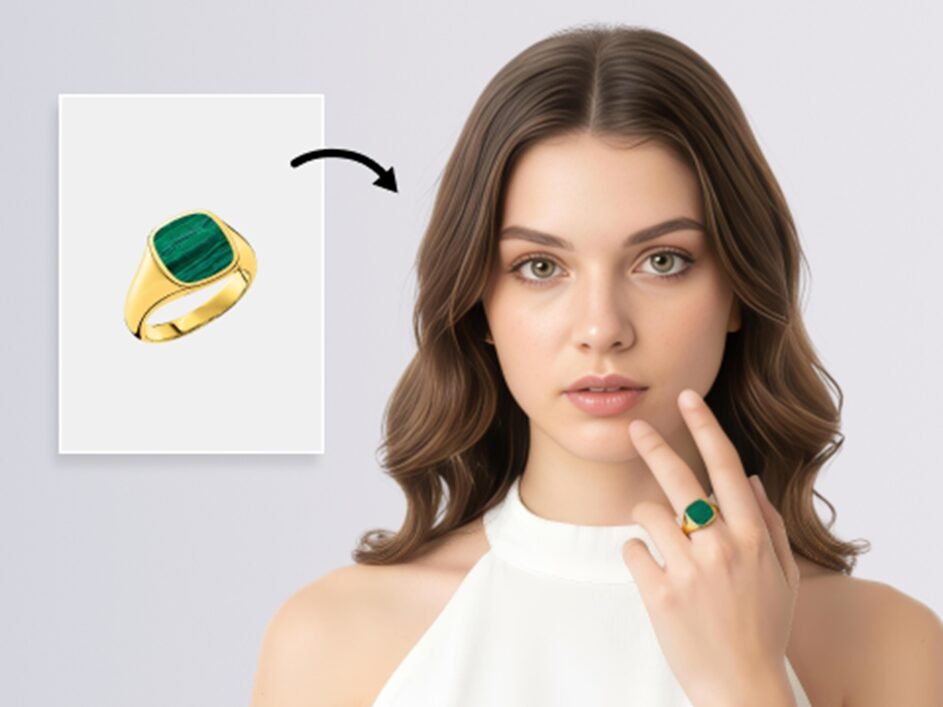
Behind every successful virtual try-on experience is a sophisticated combination of AI algorithms and 3D rendering technologies. These systems work together to ensure that the digital product aligns accurately with the customer’s body, face, or hand.
Key components include:
- Facial Recognition & Mapping: Identifies key points on the face to accurately position eyewear or earrings.
- Hand & Wrist Tracking: Enables realistic previews of watches and bracelets.
- Lighting & Occlusion Adjustments: Matches the accessory to natural lighting and skin tones for realism.
- AI Video Integration: Tools like an ai video generator from image can even transform static product visuals into dynamic video content, making them more engaging for customers.
This level of detail ensures customers feel like they are truly “trying on” the product, which increases trust and purchase confidence.
Benefits of Virtual Try-On Accessories for Retailers
Adopting virtual try-on technology brings multiple advantages for e-commerce businesses:
- Higher Engagement Rates
Customers spend more time exploring product variations, which boosts session duration and interaction. - Reduced Returns
With realistic previews, shoppers are less likely to return products that don’t meet their expectations. - Stronger Brand Differentiation
Offering cutting-edge features sets retailers apart from competitors who still rely on traditional product photos. - Boosted Conversions
Customers who interact with AR/3D try-on features are significantly more likely to complete a purchase. - Scalable Technology
Virtual try-on solutions can be integrated into websites, mobile apps, and even social media platforms like Snapchat and Instagram.
Consumer Behavior and Expectations in 2025
Modern consumers expect personalization, instant gratification, and convenience. They are no longer satisfied with guessing how an accessory might look. Instead, they want real-time proof before making a buying decision.
For example:
- Gen Z shoppers are highly influenced by visual and social experiences, making AR try-on features crucial for engaging them.
- Millennials value efficiency and are more likely to purchase when AR try-on reduces uncertainty.
- Luxury buyers appreciate the ability to preview high-end accessories digitally before committing to purchase.
Retailers who embrace these trends position themselves to dominate the future of online retail.
Integrating Virtual Try-On Accessories Into Your Store
For businesses ready to embrace this technology, integration is simpler than ever. Many SaaS platforms and APIs provide plug-and-play solutions tailored for Shopify, WooCommerce, and custom-built e-commerce stores.
Steps to implement virtual try-on:
- Select a Technology Provider – Choose a solution with strong AR and AI capabilities.
- 3D Model Creation – Convert your accessory products into high-quality 3D assets.
- Platform Integration – Add AR try-on buttons directly on your product detail pages (PDPs).
- User Testing & Optimization – Gather user feedback and refine the experience for maximum impact.
- Marketing & Promotion – Highlight virtual try-on in your product listings, ads, and social campaigns.
Conclusion
Why Virtual Try-On Accessories Are the Future of E-Commerce is simple: they solve the biggest barrier in online shopping—uncertainty. By providing customers with confidence, personalization, and an engaging shopping experience, businesses reduce returns and drive conversions. Retailers who adopt this technology today will be leaders in tomorrow’s marketplace.
SellerPic’s virtual try-on platform empowers accessory retailers to offer immersive, personalized shopping experiences by realistically visualizing products like jewelry, glasses, rings, shoes, hats, earrings, necklaces, and headbands on customers or diverse AI models. This technology increases engagement, reduces returns, and accelerates product launches all while cutting costs and simplifying integration for e-commerce businesses.
FAQs
1. What are virtual try-on accessories?
Virtual try-on accessories are AR-based tools that allow customers to preview items like glasses, watches, and jewelry on themselves digitally before purchasing.
2. How does virtual try-on improve online shopping?
It eliminates uncertainty by showing realistic previews, leading to better decision-making, fewer returns, and increased buyer confidence.
3. Can small businesses use virtual try-on technology?
Yes, SaaS platforms now offer affordable and scalable solutions that small businesses can integrate into their e-commerce stores.
4. Which accessories work best with virtual try-on?
Eyewear, rings, bracelets, necklaces, earrings, and watches are the most commonly supported accessories for AR try-on.
5. Does virtual try-on reduce return rates?
Yes, by helping customers choose the right size, color, and style, virtual try-on significantly reduces the likelihood of returns.
6. Is virtual try-on available on mobile devices?
Absolutely. Most platforms support AR features on smartphones, making it accessible and convenient for mobile shoppers.
7. Do virtual try-on accessories increase sales?
Yes, studies show that customers who engage with AR try-on features are more likely to complete purchases compared to those who don’t.
8. How do I add virtual try-on to my store?
You can integrate it by working with technology providers who offer plugins, APIs, or custom solutions tailored to your e-commerce platform.